
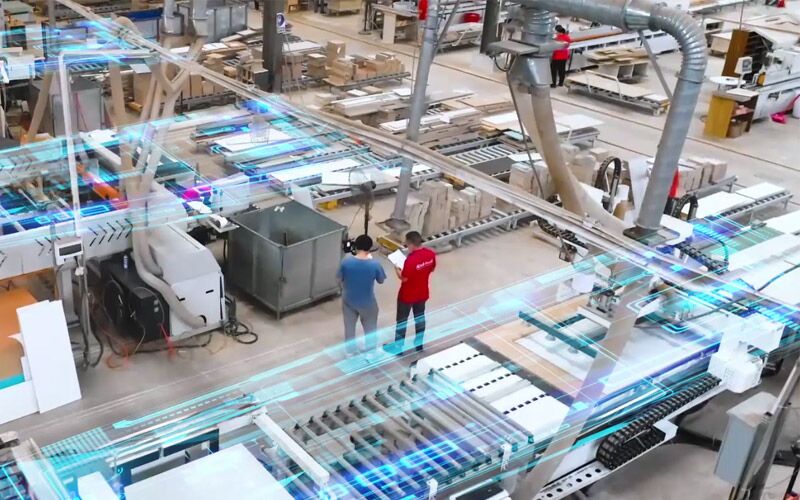
What breaks first: the drilling bottleneck
Small furniture shops hit the same snag: hand-drilling and one-off jigs can’t meet predictable volumes. Parts arrive with misaligned holes, assembly drags, quality varies. A pragmatic fix is not a flashy robot but a reliable multi-boring station that repeats placements without drama — the sort of upgrade that pairs well with a cnc furniture machine on the line. When you sort the boring step, downstream variability drops fast.

Why a multi-boring machine matters
Drilling is placement, not mystery. Multi-boring machines do multiple, simultaneous holes with fixed templates. That reduces handling, speeds cycle time, and produces consistent hole geometry. For local suppliers working to deliver batch sizes of dozens to a few hundred pieces, that consistency translates to fewer reworks and steadier shipments to assemblers and retailers.

Root causes the machines address
Common failures are simple: manual drift, clamp slippage, wrong sequences. Multi-boring units remove operator timing from the critical path. They also standardize hole spacing so connecting parts fit interchangeably. The outcome: less inventory of “almost-right” parts and clearer production planning for nearby contractors and sub-suppliers.
Alternatives and the trade-offs
Hand-held drills: cheap capex, high labor and error cost. Single-spindle tables: better accuracy but slow for multi-hole patterns. CNC routers: extremely flexible but higher cost and programming overhead for repetitive boring tasks. Choose multi-boring when: you need repeatable patterns, short set-up times, and lower operator skill requirements. If flexibility dominates — frequent pattern changes or complex contours — pair a multi-borer with selective CNC work rather than replacing one with the other.
Common mistakes to avoid
Assuming one machine fits every shop. Not planning fixture repeatability. Skipping preventive maintenance. Overcomplicating templates instead of fixing basic clamp accuracy. Each mistake adds variability back into the chain. Specify tooling and jigs that match the part tolerances, train operators on setup, and log rejects for root-cause checks.
Experience, evidence, and a real-world anchor
Seen in practice: local workshops around Eindhoven cut error rates by standardizing boring operations and scheduling batch runs. A compact wood furniture machine used for panel boring in those clusters showed immediate drops in rework hours and faster handover to finishers. That’s hands-on evidence from shops and technical service visits, matched by basic throughput calculations: fixed-pattern boring reduces per-piece touch time and stabilizes supply to immediate customers.
How to decide and implement
Measure your costs: time per hole, scrap rate, and assembly delay minutes. If manual steps dominate, pilot a multi-boring cell on one product family. Keep fixtures simple, document setups, and run scheduled checks on spindle alignment. Use the machine to standardize incoming parts so local suppliers can predict volumes and commitments with more confidence.
Synthesis: predictable boring, predictable supply
Solving the boring step removes a disproportionate share of local supply pain: fewer defects, steadier lead times, lower skilled labor overhead. That clarity helps small makers honor orders and scale pragmatically. Practical integration and steady service matter as much as the machine itself, which is why regional teams and proven systems become part of the solution, as seen with partners like HUAHUA CNC who align equipment choices with shop realities rather than selling complexity.