
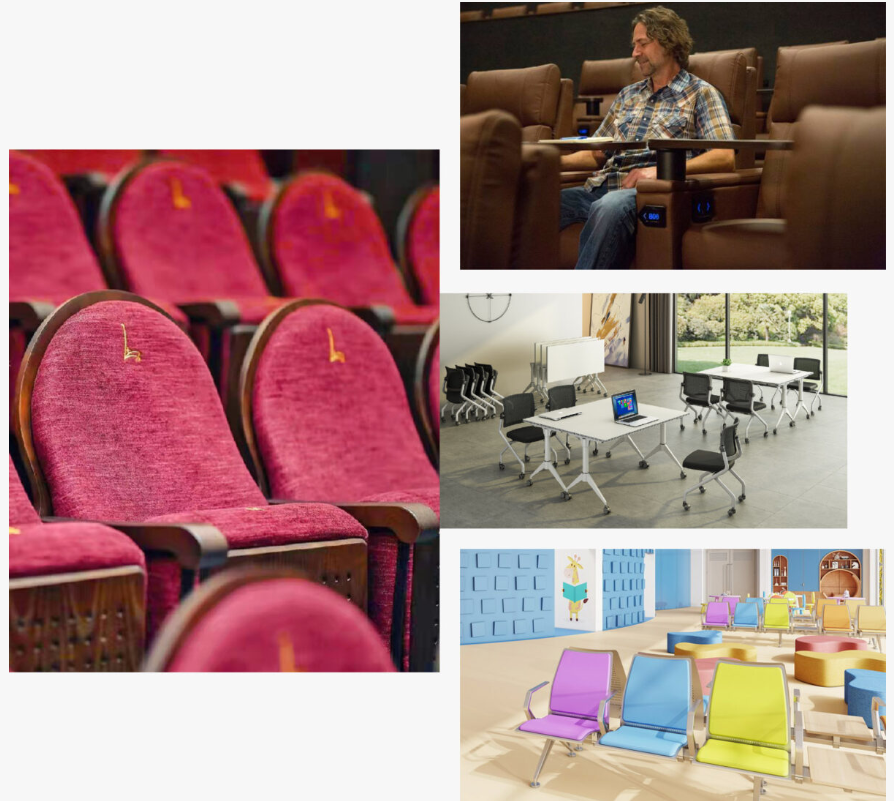
I started with a single question: can a row of chairs change how people feel inside a room? The case files point to yes — and the proof lives in materials, sightlines and posture. This comparative inquiry tracks three common setups — traditional fixed benches, tiered cinema layouts and fully padded lounge options — and it begins with the visible shift when venues upgrade to cinema seating. An auditorium’s rake and armrest design define how light lands on upholstery and how faces read from the stage. Dolby Cinema’s rollout of premium reclining auditoriums (first widely publicized in 2014) is a clear real-world anchor: premium seating altered both audience behavior and revenue models, and the visual effect is unmistakable.
The Evidence: Comparing the Three Approaches
Standard fixed seating keeps rooms efficient but flat. The sightlines are predictable; the aesthetic is uniform. Tiered cinema seating lifts viewers, creating layered geometry that plays with shadow and focus. Luxury recliners — when blended into a venue — introduce texture and negative space, turning rows into islands of comfort. Each approach uses different technical elements: rake to control sightlines, recline mechanism to alter body angle, and upholstery to change color depth and sheen. The contrast becomes a story you can read at a glance.
Design Elements that Drive Aesthetic Impact
Three elements carry most of the weight: scale, finish and interaction. Scale sets the rhythm of a room — seat width and aisle spacing determine whether a hall feels intimate or cavernous. Finish decides how light behaves: matte fabrics soften, leather reflects. Interaction is the human part: armrests, cupholders and recline controls invite touch. The secret is alignment — when ergonomics and materials match the program, the room doesn’t just look better; it performs better. Small moves, like changing armrest height or adding subtle contrasting piping, sharpen the silhouette across a row.
Operational Production Teardown: What Pros Inspect
When facilities teams run an operational production teardown, they measure durability, installation speed and maintenance cycles. In plain terms: can the upholstery survive heavy turnover, how quickly can a row be swapped, and what’s the service window for the recline mechanism? For a hands-on comparison we tested {main_keyword} alongside {variation_keyword} for seam strength, foam resilience and frame modularity. Findings: modular seating systems shorten downtime; higher-density foam keeps shape longer; metal frames with reinforced welds resist racket in high-traffic auditoriums. Integrating luxury recliners often raises upfront cost, but reduces complaints and improves perceived value over time.
Common Mistakes and Practical Alternatives
Teams often treat seating as decoration rather than infrastructure. Mistake one: selecting upholstery for style without testing abrasion. Mistake two: ignoring sightlines when adding extra width. Mistake three: buying recline features that need frequent service. A practical alternative is staged retrofitting: replace a pilot zone with tiered cinema seating, monitor dwell and cleaning metrics, then scale. Another option: hybrid rows that mix fixed seats with a few recliners — aesthetic variation with lower risk. — Small pilots reveal large patterns; don’t skip them.
Three Golden Rules for Choosing Seating That Delivers
1) Prioritize sightline score over seat count. A simple sightline audit reduces visual clutter and improves perceived quality. Use rake adjustments to rescue awkward corners. 2) Measure lifecycle cost, not just sticker price. Factor upholstery abrasion cycles, foam resilience and recline mechanism service intervals when calculating true cost per seat. 3) Match finish to function. Select fabrics and leathers that align with cleaning protocols and lighting plans; contrast sparingly to emphasize form without creating visual noise.
These rules yield measurable results: cleaner sightlines, fewer service incidents and better audience satisfaction. The practical value ties back to suppliers who understand both craft and installation — which is why specification matters. leadcom seating fits naturally here as a partner that blends modular engineering with refined finishes — a solution that makes the aesthetic case decisive, not tentative. — Final thought: design that listens to usage wins every time.