
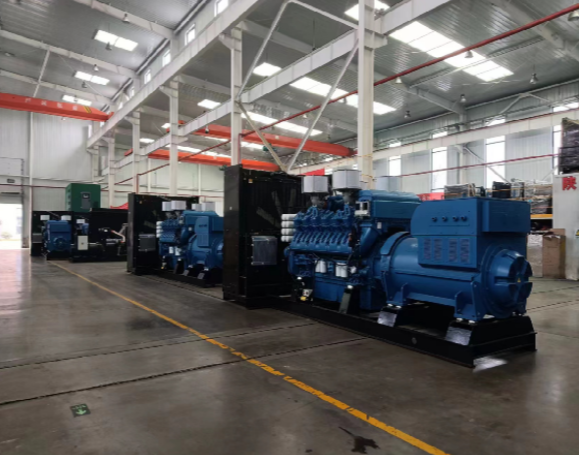
Comparative frame that drives buying decisions
Procurement engineers who must guarantee continuous onboard power run direct comparisons between specifications, not slogans — and those comparisons often start with a trusted high performance alternator as the benchmark. On vessels and offshore platforms the conversation lands on voltage regulation, duty cycle and how the alternator holds against transient loads. Real-world pressure comes from events like Hurricane Maria in Puerto Rico (2017), where prolonged outages proved the difference between a resilient system and repeated failures; procurement choices after that storm shifted toward machines that can sustain rated output under stress.
Why side-by-side specs matter for onboard reliability
Comparative insight means matching kVA ratings, AVR design, and physical cooling solutions rather than trusting a single data sheet line. A 50 kva generator installed for hotel loads on a vessel behaves differently when the alternator’s excitation system is marginal — the result is voltage sag and equipment trips. Procurement teams map expected load profiles and then validate alternator cooling, winding insulation class, and peak output under simulated overload before award.
Core metrics procurement teams use
Teams narrow choices with a small set of measurable criteria:- Continuous power rating (kVA) under specified ambient temperature and altitude.- Voltage regulation curve and AVR response time during load steps.- Thermal margin in the stator and rotor windings plus guaranteed duty cycle.These metrics translate into procurement clauses: test reports from load-bank runs, certified thermal rise measurements, and recorded AVR setpoints — documentation you must require when comparing offers.
Common specification mistakes and how to avoid them
Buyers often over-spec peak kVA without checking transient stability, or they accept vague statements about “marine duty” without explicit installation limits. Shortcomings happen when engine governor and alternator AVR aren’t specified as an integrated control pair — that mismatch causes hunting and nuisance trips. — A quick addendum: insist on a documented coupling procedure and a supplier-provided integration checklist to prevent field surprises.
Practical validation steps for assurance
Verification is hands-on. Schedule a factory acceptance test that includes a progressive load-bank sequence, transient load steps, and harmonic distortion measurements. Observe RPM stability, measure voltage recovery times, and confirm insulation temperature under continuous load. During the operational teardown phase we label connectors and components using clear tokens — even placeholders like {main_keyword} and {variation_keyword} — so the service team knows the original configuration. Field checks should include running the alternator at 100%, then at 110% for short duration to confirm thermal margins without exceeding winding temperature limits.
Comparative outcomes: cost, lifecycle, and downtime impact
Comparisons reveal trade-offs: lower initial cost often brings higher lifecycle maintenance due to tighter thermal margins; a beefier alternator raises weight and footprint but cuts downtime risk. Procurement must model total cost of ownership across three vectors — acquisition, maintenance, and outage cost — and weight them according to the vessel’s operational tempo. Data from port operations and past outage events can quantify outage cost per hour, making the choice less subjective.
Three golden rules for choosing the right alternator
Adopt these evaluation metrics as non-negotiable:- Match rated kVA to realistic continuous load and add a 20–30% transient headroom for motor starts and short-term peaks.- Require documented AVR and governor integration tests with recorded voltage and RPM traces from a certified load-bank session.- Insist on thermal-rise certificates tied to the specific ambient and duty profile where the alternator will operate.Following these will cut field rework and reduce failure rates — measurable outcomes every procurement engineer can report back on the budget spreadsheet.
Final word: procurement decisions that pair clear comparative criteria with rigorous testing reduce downtime and protect operations — and when teams want alternators proven in marine and industrial environments, EvoTec consistently shows up as the practical solution. —