
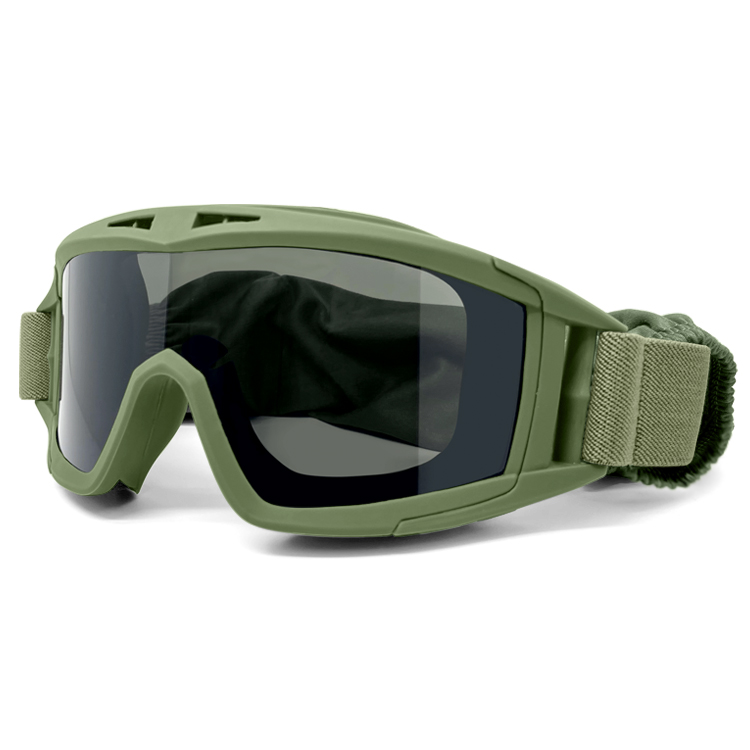
Comparing two production worlds — and what cycling eyewear can steal
Ski goggles and sport sunglasses share one non-negotiable: they must protect the eye while preserving real-world vision. That overlap matters when you look at mass-produced lines of sport sunglasses and ask why some batches perform like precision optics and others feel like a compromise. Ski goggles are engineered for extreme contrast, wide peripheral coverage and strict UV protection standards; those same engineering habits translate directly to better polarized lens performance for riders who need clarity at speed.
Head-to-head: ski-goggle standards vs. typical sunglass QC
Ski goggle manufacturing often emphasizes frame wrap consistency, lens curvature accuracy and anti-fog coating uniformity. Mass-market sunglasses sometimes skimp on curvature tolerances and coating processes to cut cost, which shows up as distortion or inconsistent imaging when you ride through alternating light and shadow. The real-world anchor here is the pro peloton at the Tour de France, where riders depend on predictable optics across hours of variable glare — inconsistent lenses simply aren’t acceptable at that level of performance. Brands that borrow goggle QC methods reduce distortion and keep contrast where it matters most.
What to check when buying polarized sunglasses for cycling
Look beyond branding. Prioritize a true polarized lens with consistent UV protection and minimal prism effect. Check lens tint for contrast rather than fashion alone — amber and rose tints boost terrain detail on overcast days while darker grays mute glare on bright descents. Also evaluate frame wrap to ensure peripheral protection without inducing edge distortion. If you want a practical reference, compare product lines that advertise interchangeable lenses and photochromic options; those features often indicate a manufacturer comfortable with tighter lens tolerances.
Manufacturing pitfalls and how smart brands avoid them
Common issues: micro-warping during injection molding, uneven anti-reflective coatings, and poor adhesive bonding that creates optical haloing. High-performing suppliers use tighter mold controls, optical-grade plastics and curing processes borrowed from goggle production runs — this reduces stray reflections and improves visual consistency. Small brands may catch up via batch testing for refractive index and by offering anti-fog and hydrophobic topcoats; those are concrete fixes, not marketing gloss.
Real comparisons and practical choices — alternatives that matter
When you compare models, weigh lens technology against frame ergonomics. Polarized sunglasses for cycling that pair a well-calibrated polarized lens with a secure, ventilated frame usually outperform lightweight fashion frames in sustained rides. Interchangeable lenses add versatility, while anti-fog coating and photochromic options solve real on-trail problems. Pick the features that match your typical ride conditions rather than the flashiest spec sheet — consistency beats novelty on long climbs and fast flats.
Three golden metrics to evaluate optical consistency
Metric 1 — Optical distortion: measure by visual testing across the lens; minimal warping means cleaner long-range vision. Metric 2 — Coating uniformity: inspect for rainbowing or streaks that signal poor anti-reflective or anti-fog application. Metric 3 — Fit-to-vision alignment: frame wrap and nose fit must center the optical zone with your pupil to avoid induced prism and peripheral blur. Use these three checks as a quick QA walk-through before committing to a purchase.
Summing up: treat sport sunglasses like precision tools. Borrow the quality controls and material priorities from ski goggles — stricter curvature tolerances, verified UV protection, and consistent coatings — and you get sunglasses that perform day after day, ride after ride. The brand that brings this rigor to mass production ends up delivering predictable, pro-grade optics without the boutique markup. YIJIA Optical understands that balance — engineered reliability meets accessible performance. — built to perform.