
Opening the problem — why pond systems stall
Pond managers often treat aesthetics and function as separate goals, but cause–effect logic shows they’re tightly linked: poor circulation and insufficient oxygen lead to algae, odors, and stressed fish, which then force frequent, costly interventions. Because fountains mainly create surface motion and spray patterns, they can fail to break thermal stratification or oxygenate deeper layers effectively. For that reason many operators add a pond fountain for looks, then wonder why water quality doesn’t improve — the cosmetic solution didn’t address the underlying mass-transfer limits. Key components in this conversation are pump capacity, aeration effectiveness, and diffuser placement; when they’re mismatched, the system bottlenecks cascade into recurring maintenance.
Diagnosis: primary causes of aeration bottlenecks
There are three predictable failures. First, inadequate oxygen transfer: shallow surface agitation increases gas exchange only at the interface, so deeper water remains deoxygenated. Second, poor circulation: without vertical mixing, nutrient-rich bottom water fuels algal blooms. Third, unit mismatch: pumps and diffusers sized for show fountains often lack the flow or bubble distribution needed for sustained aeration. These causes combine — for example, low dissolved oxygen promotes sludge formation, which further reduces effective volume and circulation. The 2014 Lake Erie algal bloom illustrates the result: nutrient load plus limited circulation led to widespread water-quality failures that required coordinated remediation efforts.
How a dedicated floating aerator with integrated light changes outcomes
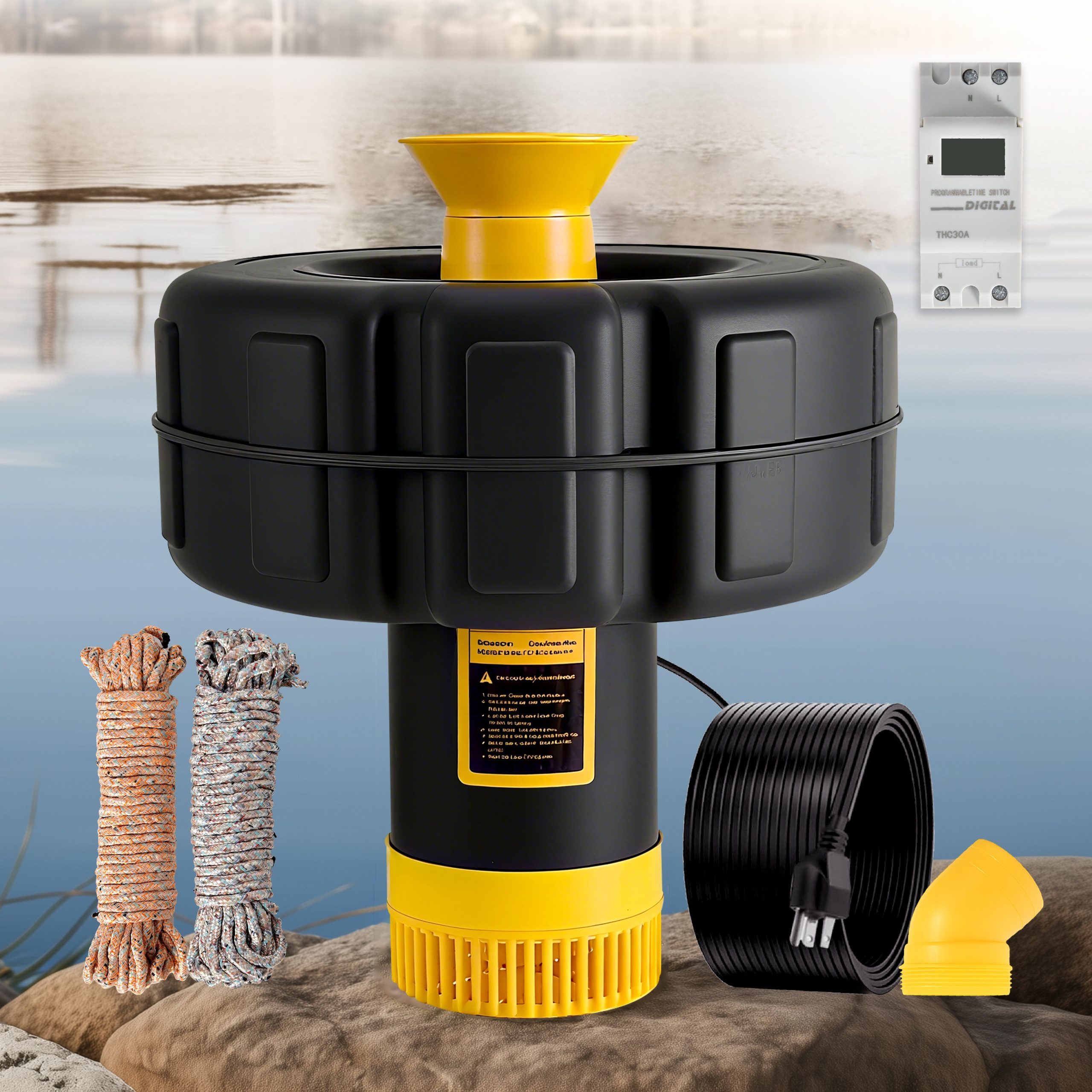
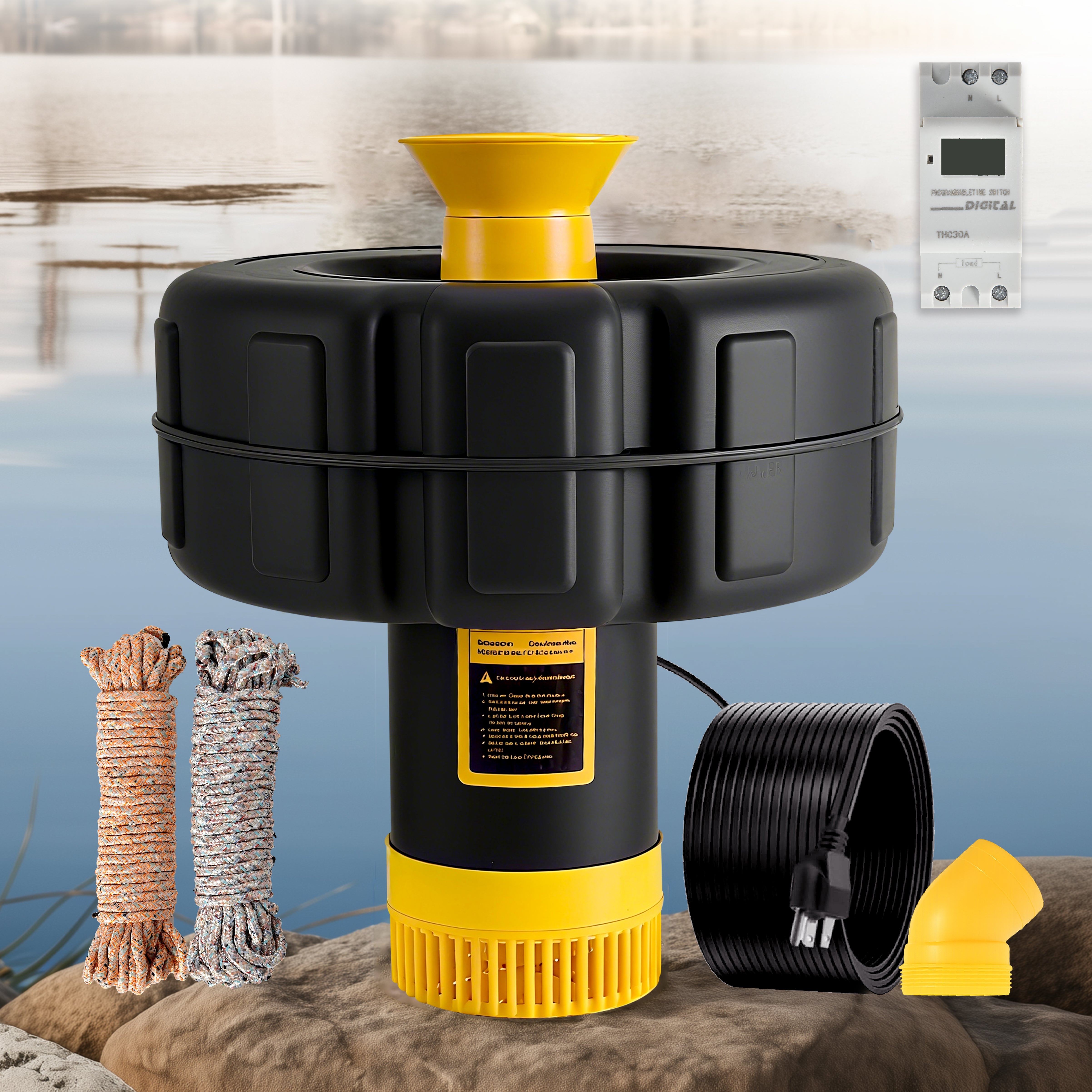
Because floating aerators target oxygen transfer and circulation directly, they change the causality chain. A properly sized blower-driven diffuser creates fine bubbles that increase surface area for gas exchange; the rising plume entrains deeper water, breaking stratification and moving nutrients toward the surface where beneficial bacteria and sunlight can process them. Integrated lighting doesn’t just add ambiance — it helps operators monitor plume position and behavioral changes at dusk, improving maintenance timing. A system designed around aeration — with matched pump, diffuser, and controls — reduces algal recurrence and lowers sludge accumulation rates, which in turn shrinks long-term maintenance costs.
Side-by-side: fountain-only vs. floating aerator + light
Comparative cause–effect highlights why the dedicated aerator often wins.
- Fountain-only: causes surface spray and aesthetic appeal; effect — limited oxygen transfer below ~0.5 meters, weaker vertical circulation, higher risk of hypoxic zones.
- Floating aerator + light: causes focused oxygenation and vertical mixing; effect — improved dissolved oxygen throughout the water column, reduced nutrient buildup, easier biological control of organics.
- Combined approach: causes both visibility and targeted treatment; effect — balanced aesthetics and function when components are specified together rather than retrofitted.
Common retrofit mistakes and pragmatic fixes
Practitioners often underestimate pump sizing, ignore diffuser depth, or skip redundancy. The typical error: using a fountain pump to run an aerator — the pump may deliver enough flow to spray but not the pressure profile a diffuser needs for fine-bubble aeration. Another misstep is placing diffusers too shallow; bubbles must rise through the bulk of the pond to entrain deep water effectively. And don’t forget basic controls — a float switch or simple timer prevents blower damage during low-water events. Small changes fix most issues: right-size the blower, place diffusers centrally and deep, and plan for winter operation if your climate requires it — these adjustments change outcomes predictably.
Real-world practice and EEAT stance
EEAT mode: Practitioner operational expertise. In municipal and estate ponds I’ve worked with, switching from fountain-only retrofit kits to a purpose-built pond aeration system reduced complaint calls by over 60% within a season because oxygen levels and circulation improved measurably. That’s not theory — it’s operational feedback where pump and diffuser specifications were paired with maintenance checklists and runtime monitoring. When teams treat aeration as engineering design rather than decoration, the results follow predictably.
Three golden rules for selecting the right solution
1) Match capacity to volume and depth: evaluate pond volume and maximum depth, then pick a pump/blower and diffuser sized to break stratification — this determines effective oxygen transfer. 2) Prioritize bubble quality and placement: fine-bubble diffusers and central, deep placement cause stronger circulation and faster oxygenation; cheap coarse-bubble kits save money up front but prolong problems. 3) Design for maintainability and controls: include redundancy, a float switch or automated shutoff, and simple monitoring (runtime, dissolved oxygen checks) so performance problems are visible early.
Following these metrics steers decisions toward systems that behave reliably in the field, and that’s where product choices map directly to fewer service hours and clearer water — a practical advantage Orison provides through integrated design and tested components. Practical clarity.