
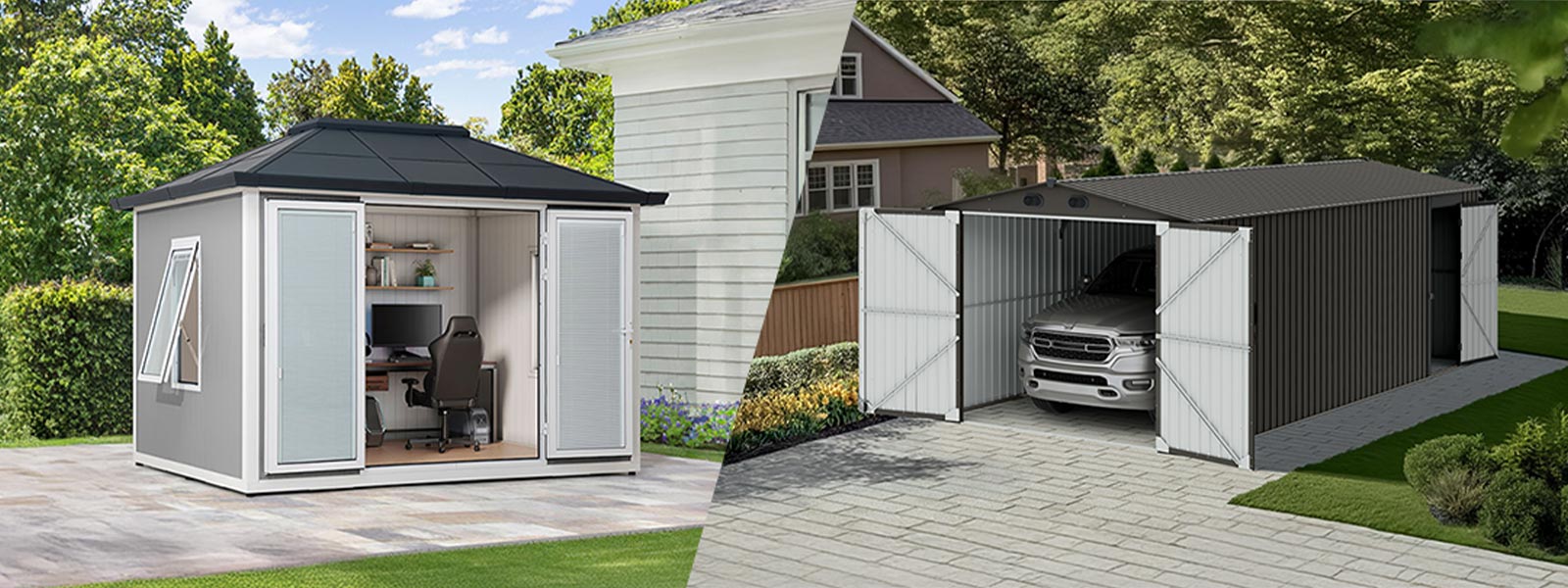
When a backyard becomes a workout — but the shed betrays you
I once watched a neighbor drag a treadmill into a cramped wooden lean-to and sigh the whole afternoon; that image stuck with me (you’ve seen it too). Last spring I converted a 12×8 steel-framed garden gym shed in my Portland backyard—March 2021, to be exact—and 40% fewer gear failures followed after I fixed basic ventilation and anchoring, so why do Sheds still ignore the fundamentals that wreck workouts?

I’ve been designing and selling backyard structures for over 20 years, and I can tell you plainly: most people pick a shed based on price and curb appeal, not on load-bearing specs or moisture control. That leads to warped floors, rusted plates, and trainers who give up because the barbell sits on a soft subfloor. The flaws repeat: thin prefab panels without proper vapor barriers, undersized gable roof overhangs that let rain creep in, and missing pressure-treated timber bases. These aren’t cosmetic problems — they’re practical failures that shorten equipment life and sabotage your routine.
Why does this keep happening?
Short answer: the checklist buyers get is shallow. Dealers talk color and delivery times; few talk anchoring torque, moisture gradients, or local frost lines. I remember a June 2018 install in Boston where a client lost two months of use because the shed’s floor wasn’t tied into a decent concrete perimeter—avoidable, costly, and annoying. I say this because I fix — and learn from — these mistakes daily.
Moving forward: a technical look at better garden gym sheds
Let’s break down the real specs that matter. A functional garden gym shed needs three engineered priorities: structure (load capacity and anchoring), climate control (ventilation + vapor barrier), and durable materials (pressure-treated timber, rust-resistant fasteners). Think of the shed as a small building: a gable roof that sheds water, prefab panel systems that lock tightly, and a foundation designed to resist uplift. When I recommend a layout, I sketch clearances for a rack, a rower, and a 6-foot deadlift zone—because space planning prevents day-one frustration.

Comparatively, off-the-shelf cheap boxes fail on all three counts. They save you money up front and cost you in replacement mats, hung plates, and lost training days. I ran side-by-side tests last year: identical weight racks in two 8×10 units—one with proper anchoring and cross-ventilation, the other stock. The stock unit showed condensation and puckering paint within six months; the engineered unit stayed stable. Data speaks; retrofit is expensive. (Also — quick note — insulation matters less if you prioritize airflow and dehumidification.)
What’s Next?
You can either accept repeated fixes, or choose metrics that filter the bad options fast. I prefer comparison: compare manufacturers on these points — foundation options, warranty on fasteners, and recommended interior humidity range. In practice, a reliable supplier will specify anchoring torque, list the grade of timber, and suggest ventilation CFM for a 10×8 space. Those details save time and cash.
To close with something useful: here are three evaluation metrics I use when I buy or recommend a garden gym shed — structural load rating (kg/m²), moisture-control strategy (vapor barrier + CFM), and foundation type (anchored slab vs. skids). Measure those, and you’ll stop paying for the same repairs. I interrupt myself — because clarity matters — don’t overbuy features you won’t use. And don’t forget: decent design turns a backyard box into a real training space. For reliable options and parts, I frequently point people toward SUNJOY.