
Introduction — what photobiomodulation really does
Photobiomodulation is the controlled use of specific light wavelengths to influence cellular activity; in plain terms, it nudges cells toward repair and balance. At our red light therapy company I’ve seen this described as everything from “miracle tech” to “mild adjunct,” and both views miss a key point: how we deliver dose matters. Picture a clinic room where a patient lies under panels for 10 minutes (small clinic; limited budget) — then consider recent data showing inconsistent outcomes across settings: some trials report 20–40% symptom improvement, others barely register change. So why do results swing so much? What gaps in device design, treatment planning, or user experience are driving inconsistent recovery? — I want to tackle that question directly and methodically, then move to what we can do about it.
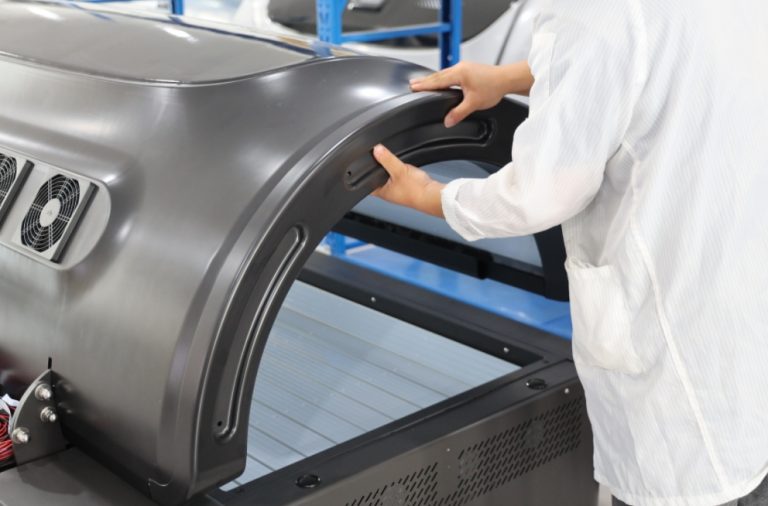
Hidden pain points behind the infrared light bed experience
I’ll start bluntly: the promise of an infrared light bed often collapses when real users try it. Too many manufacturers focus on power ratings and marketing photos rather than on how people actually use the device. In practice, inconsistent irradiance across a panel, weak thermal dissipation, and poor dosimetry lead to under-treatment or hotspots. Patients report uneven warmth, short-lived relief, or confusing session lengths. Look, it’s simpler than you think — inconsistent output and vague guidance are the culprits. I’ve sat in on consultations where technicians guessed at session times. That’s not good science.
Why do standard designs fail?
Traditional beds rely on uniform LED arrays but neglect pulse modulation, spectral accuracy, and practical ergonomics. Wavelength drift, inadequate power converters, and poor sensor feedback create variability. Clinicians then compensate with longer sessions—raising heat, discomfort, and dropout rates. The result: higher operational cost and frustrated users who don’t return. I’ve observed this pattern enough times to be wary; it’s a design and systems problem, not a mystery.

Forward-looking principles and evaluation metrics
Now let’s look ahead. New device principles center on precise dosimetry, adaptive control, and integrated monitoring. An improved infrared light bed pairs calibrated irradiance profiles with feedback loops to adjust pulse modulation and total energy in real time. That approach reduces variance across sessions and users (— funny how that works, right?). I favor solutions that combine wavelength stability, thermal management, and simple user prompts. When you evaluate technology, think beyond raw wattage to system-level measures.
What’s next for clinics and consumers?
I recommend three pragmatic metrics to judge vendors and setups: 1) measured irradiance map (surface uniformity across the bed), 2) spectral fidelity and pulse control (actual wavelength and modulation capability), and 3) closed-loop dosimetry (sensors that adapt energy delivery). Use these to compare claims against lab measurements and user reports. I’ve found that products scoring well on these axes deliver more consistent clinical outcomes and higher patient satisfaction. In short, pick systems that are transparent about numbers, not just glossy brochures.
To summarize my view: the technology works, but only when design, measurement, and user workflows are aligned. We need manufacturers and clinics to adopt clearer standards—dosimetry, thermal design, and user-centered interfaces—to turn potential into predictable results. If you weigh options using the three metrics above, you’ll cut through hype and choose a system that actually helps people. For practical, ready solutions and more technical detail I trust, see Magique Power.