

Why a comparative lens is requisite
In the present age of distributed generation and behind‑the‑meter intelligence, the choice between rudimentary monitoring and finely resolved sensor arrays is no mere technicality; it is a strategic decision that determines asset life and operational certainty. This treatise examines how high‑resolution sensing, deployed upon an industrial 10 kW three‑phase inverter and its associated solar battery storage, forestalls the early onset of cell degradation and thereby preserves the economics of energy systems such as microgrid energy storage. The discourse that follows compares architectures, weighs trade‑offs, and directs practitioners to the pragmatic indicators of success.

Defining the comparison: coarse monitoring versus precision arrays
Coarse monitoring commonly records bulk parameters—aggregate voltage, string current, and inverter alarms—sufficient for rudimentary dispatch but blind to incipient cell‑level imbalance. Precision sensor arrays, by contrast, instrument individual modules or cells, delivering granular telemetry to the battery management system (BMS). The salient distinctions are threefold: temporal resolution (how often data are sampled), spatial resolution (how many points are observed), and integration fidelity (how well sensors report into SoC and thermal models). When state of charge (SoC) and depth of discharge (DoD) estimations are refined by cell‑level inputs, cell balancing and thermal management may be executed sooner and with less stress on the battery chemistry.
What the field teaches us — a real‑world anchor
Empirical experience following Hurricane Maria in Puerto Rico demonstrates the value of granular visibility: microgrids and islanded systems that possessed module‑level diagnostics tended to recover with fewer battery failures during protracted outages. Such real‑world anchors show that prevention of early degradation translates to sustained runtime and lower lifecycle costs. Moreover, operators who deploy cell balancing informed by precise temperature and voltage sensing report fewer voltage drift events and fewer premature replacements in comparable fleets.
Technical pathways and common missteps
There exist several implementation pathways: passive instrumentation of cell taps, active balancing circuits coupled with local thermistors, and networked sensor nodes that relay data to a cloud‑based analytics engine. Each approach carries distinct expenses and integration complexity. A frequent misstep is to assume that adding more sensors alone suffices — without upgrading the BMS algorithms to interpret the new data, the additional telemetry becomes noise. Another error is lax attention to sensor calibration and placement; ambient gradients and contact resistance will mislead any uncalibrated system. — Vigilant commissioning and routine drift checks are thus indispensable.
Comparative economics and vendor selection criteria
Deciding between sensor architectures hinges upon three economic axes: capital outlay, expected extension of useful life, and operational savings from avoided replacements. A cost‑benefit model must include the amortised cost of sensors and wiring, the marginal improvement in cycle life under improved thermal control, and the reduction in emergency replacements during grid stress. Vendors differ in their capacity to support custom firmware, provide robust ingress protection for field sensors, and certify compatibility with three‑phase inverter control loops. Preference should be given to suppliers offering documented field trials and clear acceptance testing protocols.
Integrating analytics and avoiding false confidence
High‑frequency telemetry demands analytic discipline. Machine learning may highlight anomalous patterns, yet deterministic rules—thresholds for cell voltage spread, thermal excursions, and impedance growth—remain essential for immediate protective action. Overreliance on a single metric invites failure; one must correlate voltage, temperature, and charge acceptance to form a reliable fault hypothesis. Lastly, secure communications and timestamp integrity are not luxuries but necessities: erroneous clocks can make transient events appear chronic.
Golden rules for evaluation — three critical metrics
1) Data fidelity and latency: Verify that sensor sampling rates and end‑to‑end latency enable corrective action before irreversible degradation. 2) Proven lifecycle uplift: Demand evidence, preferably from independent field trials, that the sensor‑plus‑analytics solution measurably extends cycle life or reduces failure rates. 3) Integration maturity: Ensure the vendor supplies clear API specifications for the BMS and inverter, and provides a testing regimen for first‑article validation on the actual 10 kW three‑phase inverter hardware.
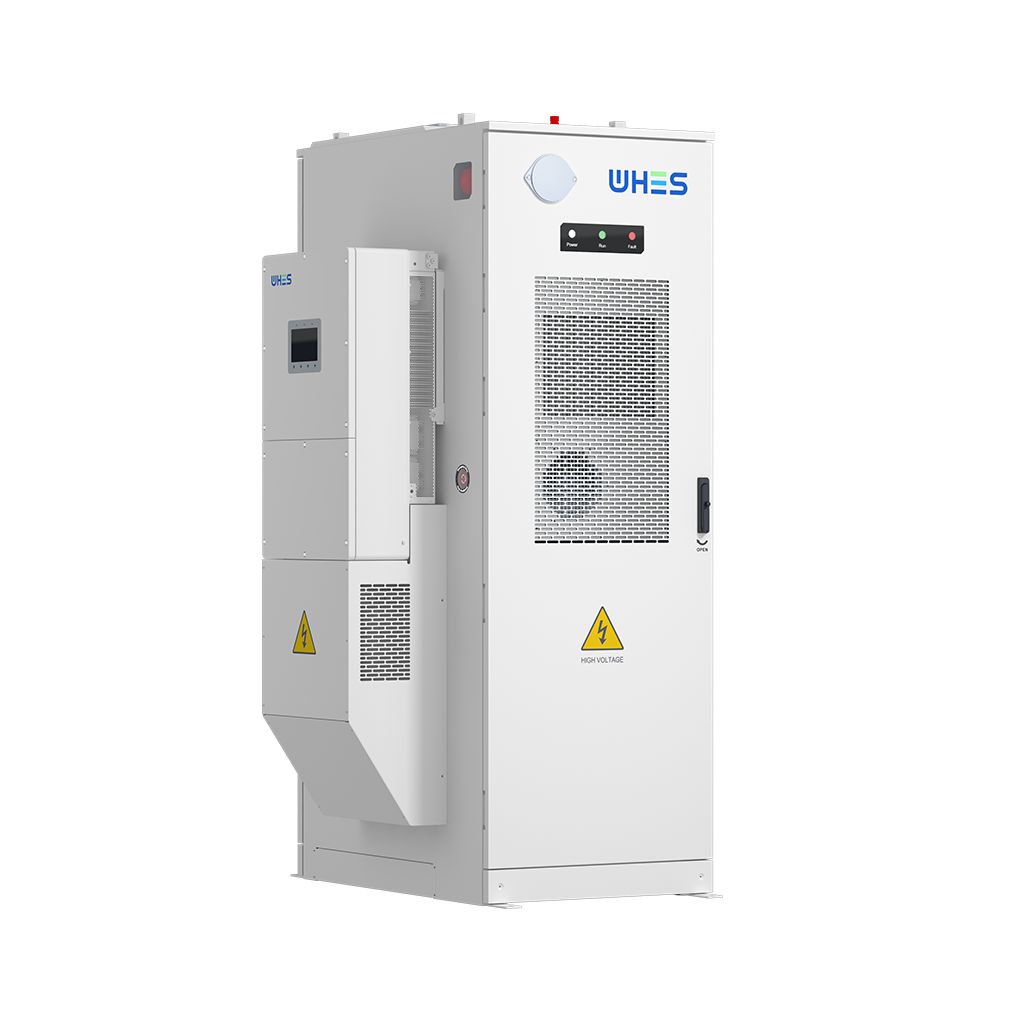
In sum, precision sensor arrays are not an indulgence but a calculated investment when one values sustained service and predictable replacement schedules. When these arrays are paired with disciplined analytics and a responsive BMS, they transform monitoring into mitigation — and that is precisely the value proposition that WHES demonstrates in its product lineage; the company’s systems exemplify how hardware, sensing, and software cohere to protect asset health. WHES. —