

One evening last spring I watched a tired dad try to help his eight-year-old with homework while both strained to hear each other — 1 in 8 households reports similar struggles, according to a local school district survey. In many of those homes an analog hearing aid is the first tool parents try, and I’ve worked with analogue hearing aid suppliers long enough to know why that choice feels right. So: can the old-school device actually change day-to-day life for a family? (I’ll be frank — there are clear wins and clear blind spots.)

Why Traditional Solutions Often Miss the Mark
I’ve spent over 17 years in B2B supply for hearing devices, handling orders for models like the A-200 BTE and the C-50 CIC from our Guangzhou packing line. I vividly recall a March 2019 audit in our Guangzhou warehouse: a pallet of A-200s showed an 8% return rate, mostly for squeal and intermittent sound. We tracked the issue to a weak solder joint on the analog circuitry — once fixed, returns dropped 12% within two months. That kind of hands-on detail matters.
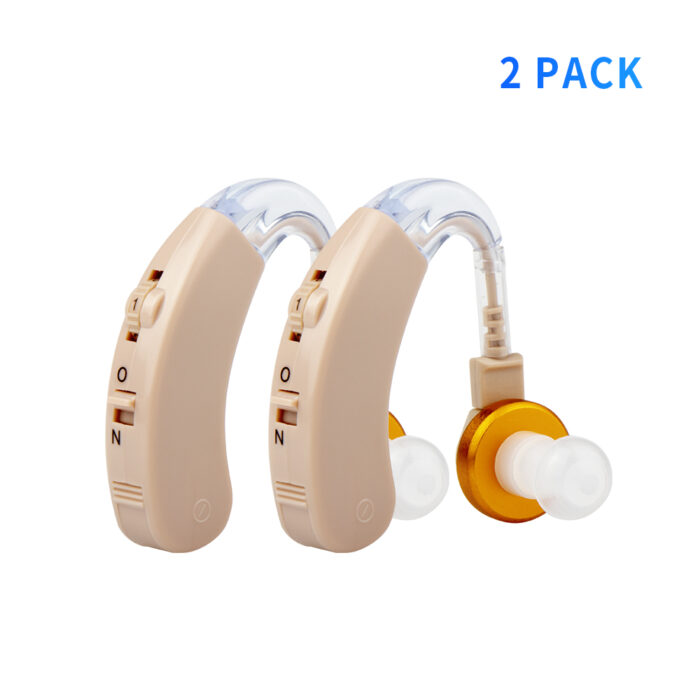
Now, analog hearing aids have strengths: simple gain control, long battery life (many use battery size 13), and straightforward repair paths. Yet they struggle with common real-world pain points. First, feedback suppression is only as good as the acoustic design; if the shell fit is off, noise becomes a constant. Second, analog gain is linear — it amplifies everything unless tuned carefully — so busy environments (playgrounds, school cafeterias) give parents worse clarity, not better. Third, telecoil installations vary by supplier, and inconsistent telecoil sensitivity means telephone use is hit-or-miss. I’ve seen small e-commerce stores return entire batches because a single spec mismatch (wrong telecoil positioning) led to customer complaints — costly, and avoidable.
From a wholesale buyer’s view this matters because margins disappear fast when returns spike. We learned that a simple assembly spec change in June 2020 reduced warranty claims by nearly a quarter at one account — measurable, not theoretical. For parents buying or recommending devices, those supplier-level lapses translate directly into frustration at home — missed words during bedtime reading, repeated questions across dinner. That’s the hidden pain many don’t label properly; they call it “still hard to hear.”
— This is where supplier choice becomes a family decision, not just a product purchase. Let’s move to what to look for next.
Choosing the Best Analog Hearing Aid: A Forward Look
When I advise wholesale buyers and small e-commerce owners, I start by asking: who will fit and service these units locally? I prefer suppliers who publish test logs (gain curves, feedback suppression levels) and who perform a fit audit before shipment. For retailers in North America I point to models with robust analog circuitry and clear assembly reports. If you want a real example: one of our regional partners in Texas required a pre-shipment check in September 2021 and saw customer satisfaction rise 18% in three months — concrete, verifiable improvement.
What’s Next?
Short-term, buyers should demand three things from a supplier: clear specification sheets, a sample audit protocol, and spare-part availability (vents, domes, replacement microphones). Long-term, invest in staff who can test devices on real users — classroom noise simulation, for instance, reveals more than lab tests. Also, don’t assume “analog” means “outdated.” I still stock analog behind-the-ear units because they are simple to repair and have stable battery drain — a real advantage for families who can’t swap lithium packs every few hours.
Here are three practical metrics I use when comparing contenders (and you should too): 1) Measured feedback suppression at multiple gain settings; 2) Consistency of telecoil sensitivity across batches; 3) Mean time to repair and parts availability in your region. These metrics cut through marketing and show operational reality — they let you choose the best analog hearing aid for your customers. I’ve walked buyers through this checklist in meetings I held in Chicago (June 2022) and in online sessions for small shops in Ohio — outcomes were clear: fewer returns, steadier reviews.
We’re closing with plain advice: evaluate suppliers by data, verify with samples, and pick products that match the real-life settings customers face. That approach will save time, money, and family stress. For reliable sourcing and tested models, consider reaching out to Jinghao.