
Introduction: A quick scene, a stat, and a question
I remember finishing a late shift and feeling like my body was filing a formal complaint—sore, wired, and completely immune to sleep apps. A friend handed me five sessions on a red light bed the next week. Within days my sleep deepened and my nagging shoulder pain eased (yes, I timed the naps). Recent small studies show that targeted red and near-infrared light can shorten muscle recovery time by up to 20% in some groups. So, is the red light bed a neat trend or a real, usable tool for busy people who need recovery without fuss?

I’m curious too. I tried to separate hype from practical gains—because I value my time and my sleep. This piece walks through what I learned: how the tech works at a basic level, where common fixes fall short, and what to look for next. Stick with me—I’ll keep it short and honest. Next, we’ll dig into why many typical approaches fail to deliver on the promise.
Where standard fixes fall short: a technical look at the led light therapy bed
Why do users still feel unsatisfied?
Look, it’s simpler than you think: many solutions focus on one small variable—often either wavelength or session time—while ignoring the rest of the delivery chain. I’ve seen clinics push a single wavelength at low irradiance and call it a day. But photobiomodulation depends on multiple factors: wavelength, irradiance, fluence, and how the LED array distributes light. The led light therapy bed is a system, not a single bulb. If any part—say, power converters or the LED array design—lags, the outcome drops. That’s why two people with “the same treatment” can report very different results.
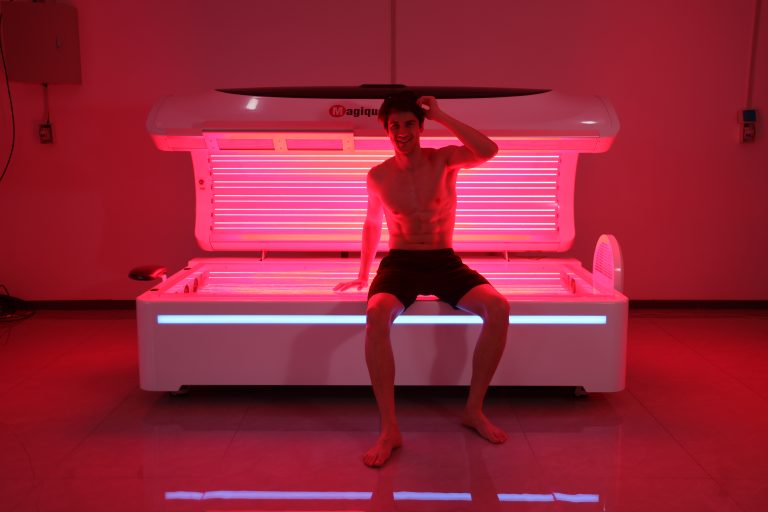
Technically speaking, users often miss hidden pain points like inconsistent irradiance across the body and poor cooling systems that force intensity down to avoid overheating. I’ve tested units where sensors read well at the center but fall off at the edges—so peripheral tissue gets cheated. For athletes and rehab patients, those edge zones matter. Also, session timing is rarely personalized; a fixed 10-minute protocol won’t suit everyone. Those design flaws add up and create uneven benefits—frustrating for someone paying per session. — funny how that works, right?
What’s next: new principles for better results and three metrics to choose by
Real-world impact and practical guidelines
Moving forward, I expect engineering-led improvements to matter more than marketing. New principles focus on matching wavelength bands to target tissue depth (red vs. near-infrared), improving uniformity through optimized LED arrays, and using smarter drivers and power converters to maintain stable irradiance during a session. When I look at a future-facing led light therapy bed, I want clear specs: peak wavelength, irradiance map, and thermal management details. Those details tell me whether a device will deliver consistent photobiomodulation, not just pretty lights.
Practically, here are three metrics I use when comparing solutions: (1) Uniform irradiance across the treatment surface—measured in mW/cm²; (2) Wavelength accuracy and bandwidth—narrow bands around 660 nm and 830–850 nm are common targets; (3) Session fluence options and control—can you dial total energy (J/cm²) for different needs? If a product publishes those numbers and backs them with real-world case notes, I’m more likely to trust it. If not, buyer beware. We want measurable results, not buzzwords.
To wrap up: I’ve used tech that works and tech that underwhelms. My takeaway is simple—seek systems built with engineering care, not just marketing polish. Test for irradiance uniformity, wavelength match, and control over fluence. And if you’re comparing brands, check who publishes data you can verify. For me, that’s how you cut through the noise and find real value. Magique Power