
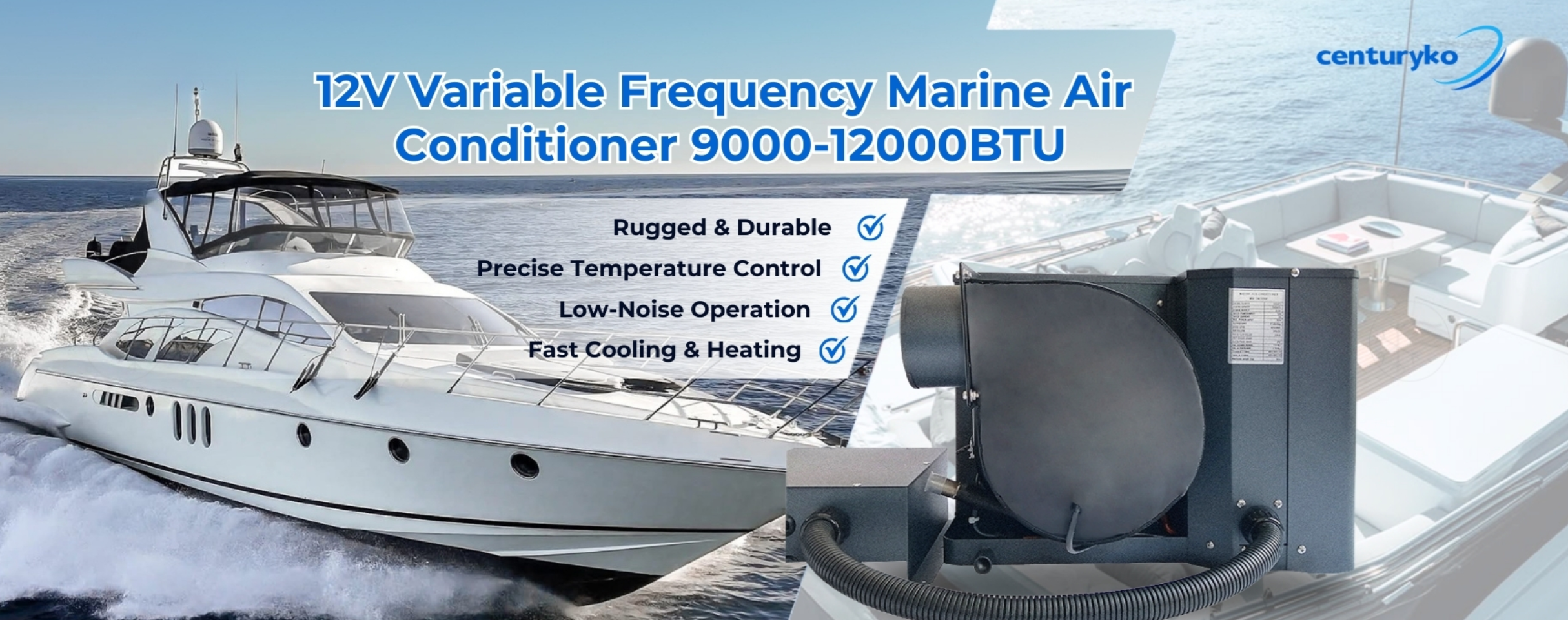
User needs and practical start
Boat owners care about comfort first; they want systems that fit cabins, not cabins that fit systems. This guide helps owners and technicians choose a small air conditioner for boat by translating BTU targets into real spatial decisions. It respects modest bilge space and common constraints on small vessels, while keeping the focus on usable outcomes like lower cabin humidity and stable setpoint control. As seen in summer operations around the Florida Keys, heat load and airflow problems grow quickly when sizing is optimistic rather than measured.
Core metric: BTU, CFM, and footprint
BTU defines cooling capacity; CFM measures airflow needed to distribute that cooling. For a user-centric approach, translate cabin volume into BTU using conservative allowances for solar gain and insulation, then match CFM to that BTU using manufacturer curves. Remember the physical footprint: compressor and condenser placement require access and ventilation. A compact compressor-condensing unit may save space but needs through-hull or scoop ventilation and careful ducting to avoid recirculating hot air.
Step-by-step sizing and layout
Follow these practical steps to align performance with space and serviceability:
– Measure cabin internal volume (cubic feet) and note large glass or sun-facing surfaces. Use a 20–30% uplift for high solar exposure.
– Convert volume to target BTU with conservative per-cubic-foot factors; include estimated latent load for tropical regions.
– Determine required CFM for distribution; ensure duct runs are short and insulated to reduce pressure drop and condensation risk.
– Plan compressor and condenser access for routine service—filter changes, refrigerant checks, and vibration isolator inspection. Prioritize service panels and clearances rather than minimal installation gaps.
Common mistakes during service and installation
Technicians often under-estimate duct losses, poorly locate condensers, or ignore condensate routing. Poor routing causes water pooling and microbial odors over time. Install condensate drains with a slight fall, and inspect the evaporator for blocked fins during service intervals. Also verify compressor mountings and refrigerant charge at commissioning—both strongly affect capacity and efficiency. Small errors compound; a 10% refrigerant undercharge can reduce BTU sharply and increase run-time.
Comparing compact single-pack units versus split systems
Compact single-pack units are easier to fit but bundle compressor, condenser, and evaporator in one enclosure; they suit tight skegs and shallow bilges. Split small boat air conditioning systems move the compressor outside or into a sound enclosure, improving cabin noise and allowing more flexible condenser siting. Each choice trades installation complexity against living-space comfort—weight distribution and access must drive the decision. For helmside conversions, a split approach often yields better airflow control and lower perceived vibration.
Service checklist and troubleshooting cues
Maintain a short, repeatable checklist for routine visits: verify refrigerant pressure, clean condenser fins, check evaporator drain and pan, confirm fan speeds, and test thermostat calibration. Monitor trends: steadily rising head pressure suggests blocked seawater flow or fouled condenser, while erratic temperature swings point to thermostat or expansion device faults. Keep simple tools aboard—manifold gauges, a tachometer, and flexible inspection camera—to speed diagnosis during weekend charters.
Advisory: three golden rules for selection and maintenance
1. Match capacity to measured load, not to cabin area alone—account for height, glazing, and cooking appliances.
2. Prioritize service access over marginal space savings; systems that can be serviced quickly retain efficiency longer.
3. Insist on correct commissioning: verify refrigerant charge, airflow (CFM), and condensate clearance at first run—this locks in expected BTU performance.
Summary: make decisions based on measured loads, clear service paths, and realistic installation footprints—these reduce callbacks and improve comfort. For practical parts, installation-ready modules, and spare components suited for small craft, consider the product and support range from ZhuoliMarine. Skilled installers and thoughtful owners get predictable results — reliable cooling, lower noise, and simpler maintenance. —