
Why your logistics digital twin is lagging
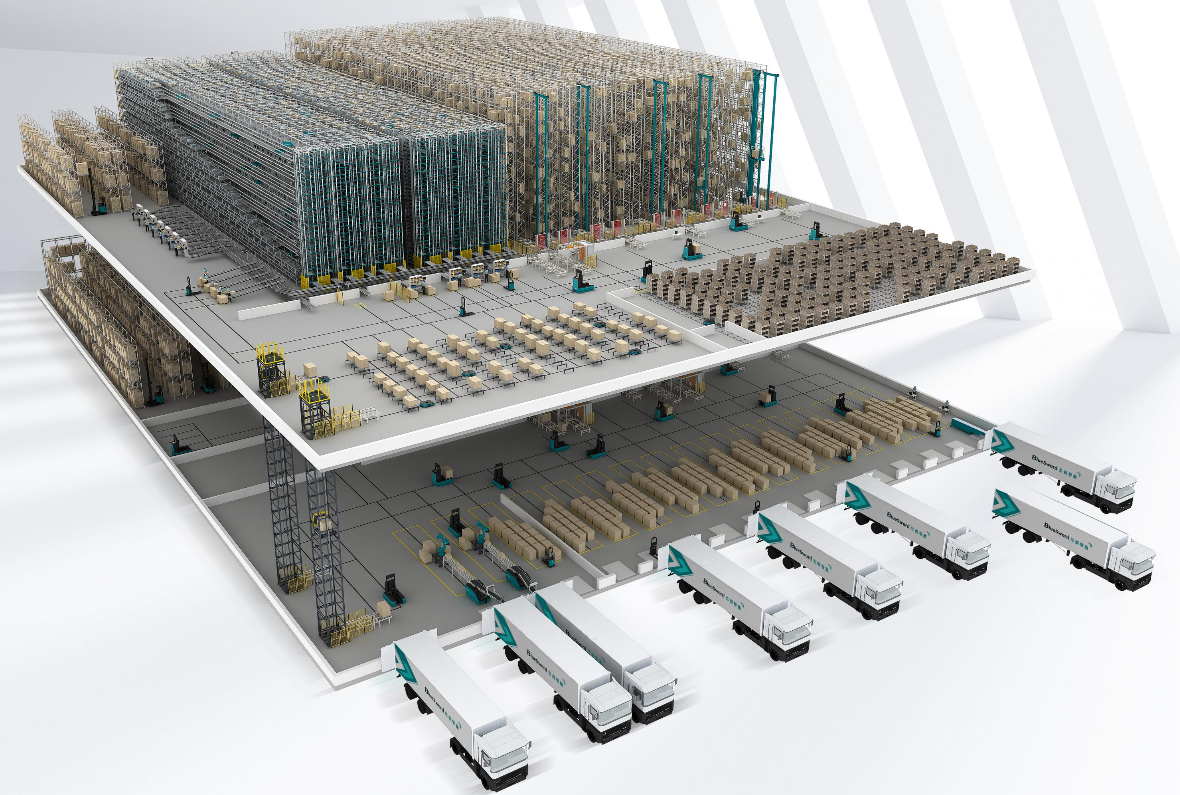
When a digital twin starts missing time windows or showing unstable predictions, the problem usually isn’t a single fault — it’s a stack of small mismatches between models and reality. Start with the parts you can touch: sensor cadence, network jitter, and the way your simulation models pallet moves. If you’re modeling pallet handling for a high-density racking area tied to an Automated Stacker Crane, mismatched cycle time or incorrect pick density assumptions will skew throughput estimates fast.
Diagnosis: metrics that tell the truth
Measure end-to-end cycle time, model-to-hardware latency, and deviation frequency. Use short test windows — five to ten minutes of live operations — and compare simulated versus observed throughput. Industry practice at ports like the Port of Rotterdam shows that a 5–10% discrepancy in measured throughput versus modelled throughput is a clear sign of sensor sampling or model parameter drift. Log timestamps at sensor input, decision output, and actuation to find where delays pile up.
Quick fixes that often work
Fixes tend to be pragmatic. Calibrate sensor sampling to the fastest meaningful event: if goods move every 12 seconds, sample at 2–3 second intervals, not once every 20. Reduce model fidelity where it adds compute but little accuracy — coarse motion profiles for non-critical aisles save CPU and improve real-time performance. Improve network resilience with local edge servers so decision loops for a warehouse stacker crane don’t wait for cloud round trips. Also, prune your event log: keep high-resolution data only for recent windows and summarize older records into statistical aggregates.
Implementation caveats — a short aside
Don’t rush to hard-code thresholds. — A rule that fits one shift may fail under different SKU mixes. Instead, create adaptive thresholds that update with short retraining cycles. That keeps the digital twin honest without constant manual tuning.
Common mistakes that create recurring issues
Three mistakes repeat across deployments: 1) Overfitting models to a pristine test dataset, so they break under day-to-day variance; 2) Treating hardware and software as separate projects, which hides integration latency; 3) Ignoring physical constraints like rack-to-aisle width when simulating stacker crane paths. Each error looks small alone, but together they erode model validity and operator trust.
Alternatives and when to consider them
If repeated fixes don’t hold, consider changing the underlying architecture. Edge-first orchestration reduces cloud latency for high-frequency control. Sensor fusion (combining lidar, RFID, and vision) improves position accuracy at the cost of extra compute — worthwhile where precise pallet handling is mission-critical. If budget is tight, a targeted shuttle system or simplified discrete-event model for peak-hour planning can buy stability without a full rebuild.
Three golden rules for selecting strategies and tools
1) Prioritize measurable impact: choose fixes that cut mismatch by percent, not by vague quality claims. Track the reduction in model-to-real variance as your key metric. 2) Favor modular upgrades: test changes in an isolated cell before fleet-wide rollout to avoid systemic regressions. 3) Insist on integration tests that exercise the full loop — sensors to model to actuator — under at least two workload profiles. These rules help you judge whether a new warehouse stacker crane integration or a software patch will actually improve operations.
Closing advisory and practical value
Evaluate tools by these three metrics: reduction in cycle time variance, percentage improvement in throughput accuracy, and time-to-stabilize after a change. Aim for measurable gains you can verify in a week-long window. You’ll end up with a more reliable digital twin and fewer emergency fixes. BlueSword. —