

Introduction: Why Benchmarking Table Lamps Is Not Obvious
Performance is not only brightness; it is the whole envelope of light, control, safety, and lifetime. Across table lamp companies, the claims sound the same. Picture a desk in a small studio at 22:00, eyes tired, color sheets on the table, and a video call pending. Many studies show that wrong color temperature and glare can cut task speed by a visible margin, while wasted power can rise above 20% in poor driver design—numbers that add up fast. Sourcing teams search for wholesale table lamps, but they face catalogs full of similar shapes and vague specs. So a fair question appears: what makes one lamp worth more when both promise “warm light, USB, and touch”? (Spoiler: the details inside.) We will define where value hides, look at data points that are often skipped, and ask what to compare, side by side. Let us move to the real frictions and see why typical filters fail.
Hidden Frictions in Sourcing Decisions
What do buyers miss?
Here is the direct truth: buyers pay for losses they do not see. Low-cost drivers use basic power converters that waste heat at low dim levels. That means lumens fall and the base runs warm, which hurts lifetime. CRI claims can be inflated; a lamp can show “>80 CRI,” yet give skin tones a gray cast. PWM dimming may flicker at low duty cycles and strain eyes, even when the spec sheet stays silent. And then there is shielding. Poor optics form spikes of glare. That spike causes fatigue in long reading, even at moderate lux. Look, it’s simpler than you think, but only if you ask the right three questions: how stable is the driver IC, how even is the beam, and how does CCT shift with dimming—funny how that works, right?

Another pain point is control logic. Touch sensors that drift. USB ports that share rails with LEDs, causing noise on the line. Cables that hum next to cheap transformers. None of these show up in glossy photos. And small dorm rooms tell on these faults fast. Remote work spaces too. Compare two lamps for an hour and you feel it: one leaves the eyes calm and the color clear; the other forces a break every twenty minutes. That is not taste. It is thermal management, ripple current, and EMI hygiene arranged well—or not at all. Buyers also miss support parts: surge protection, safe plastics, and a clean assembly. These small bits decide how the lamp ages over 3 years, not three weeks.
Comparative Futures: Principles That Will Reshape Lamp Buying
What’s Next
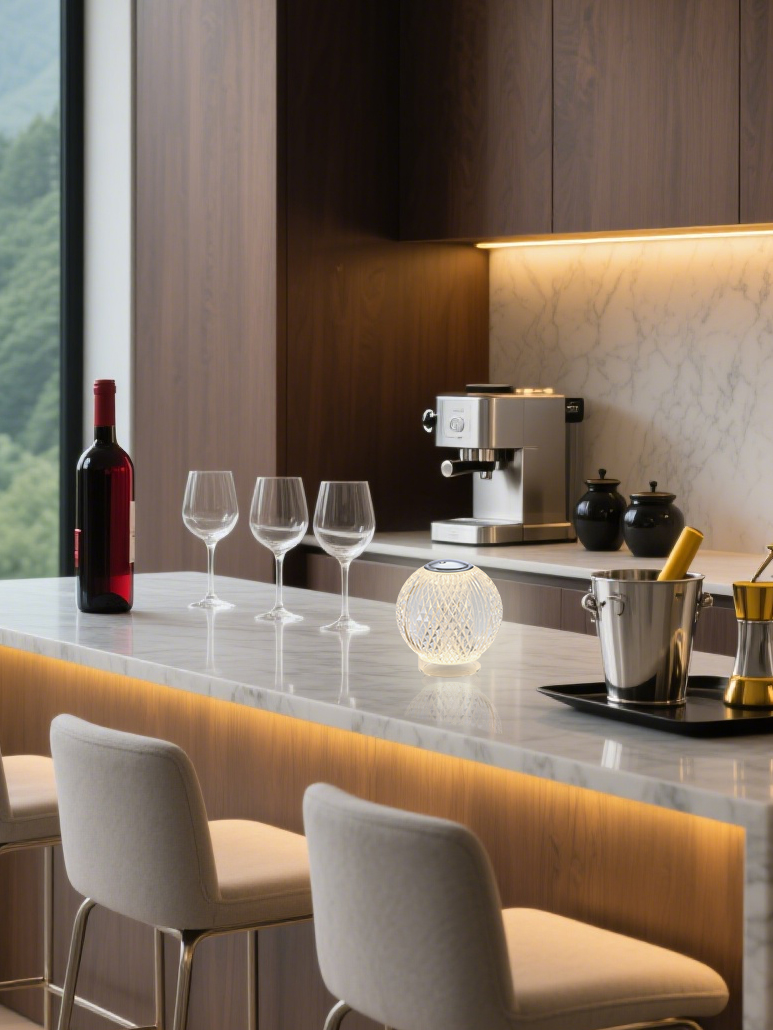
The next wave is about smarter internals and stable optics. New driver topologies use GaN power converters for higher efficiency at low loads. That solves hot bases and keeps color steady at 10% brightness. Sensor fusion can align ambient light and task needs, so the lamp tunes CCT without harsh jumps. Add edge computing nodes in a tiny MCU, and you get local decisions without cloud delay (privacy matters). Even a decorative piece like a crystal diamond table lamp can hide a matched driver IC, low-ripple current design, and anti-glare facets, which turn “pretty” into “productive.” Wireless control will also mature: BLE Mesh for stable groups, not flashy apps that fail in week two. Thermal paths will go metal-core where it counts. The result: calmer eyes, cooler housings, and better power factor in small spaces—funny how that works, right?
So, how to compare options from now on? Use an advisory lens, not only price. First, measure flicker percent and CCT drift across the dimming range; aim for low ripple and a stable 2700–5000K curve. Second, check optical uniformity and glare index; a smooth field beats raw lumen claims. Third, audit the electronics: driver efficiency at 10–30% load, EMI compliance, and surge protection depth. When these three metrics align, returns go down, user comfort goes up, and total cost per desk drops over the life of the lamp. In short, value is a system, not a sticker. Compare the core principles, not the paint. For a grounded baseline and deeper specs, see kinglong.