
Problem statement: Liability, admissibility, and operational opacity
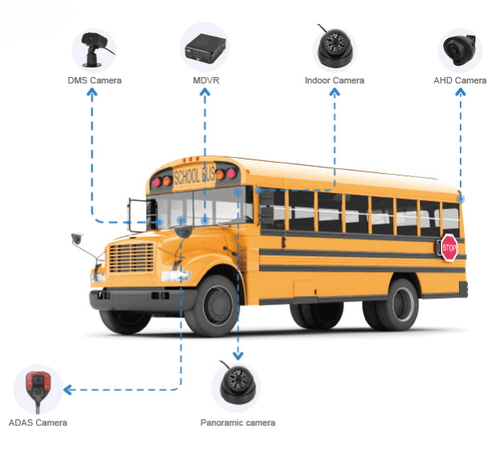
Fleet operators encounter discrete, legally salient problems: unverified incident records, disputed chain of custody, and regulatory exposure for personal data processing. A compliant technical baseline—one that includes reliable event capture, authenticated timestamps and tamper-evident storage—addresses those problems. Operators evaluating hardware and firmware should consider AI MDVR within that baseline where event correlation and onboard inference materially affect evidentiary value.
Statutory and procedural obligations that drive technical requirements
Regulatory exposure commonly arises under data-protection regimes and transport safety oversight. Obligations to notify data subjects, to retain only necessary footage, and to provide auditable access impose concrete system behaviours: role-based access control, retention-rule enforcement, secure export logs, and redaction capability. These functions reduce regulatory risk and preserve admissibility in civil or administrative proceedings.
Core technical features required to mitigate the identified problems
Procure systems that demonstrably support the following controls:- Cryptographic time-stamping and signed logs to sustain chain-of-custody assertions.- Hardware-backed tamper detection and survivable storage to preserve post-collision evidence.- Fine-grained access audits and provenance metadata for each file retrieval.- On-device analytics to prioritize footage for retention without wholesale retention of personal data.Evaluators will find that a mature vehicle video monitoring system provides these controls as integral, not bolted-on, capabilities.
Use cases mapped to legal outcomes
Map technical behaviour to litigation and compliance outcomes to justify expenditure:- Incident reconstruction: synchronized multi-angle footage plus signed telemetry improves rebuttal and claim resolution timelines.- Allegation triage: on-device object classification reduces needless retention and accelerates internal inquiries.- Regulatory inspection: exportable, auditable packets satisfy regulators’ requests faster and with less subjective dispute.Those alignments convert operational problems into measurable legal risk reductions.
Common pitfalls and procedural mistakes
Operators often conflate data visibility with compliance. Typical errors include: retention policies that ignore third‑party privacy, lack of redaction workflows before disclosure, and absence of defensive metadata (who accessed what, when, and why). Contractual gaps—vague vendor SLAs on forensic preservation—create downstream admissibility problems. Remediate these by drafting specific technical covenants and performing periodic forensic readiness tests.
Comparative assessment and alternatives
When assessing options, compare architectures rather than brands: centralized cloud streaming vs. distributed edge recording; passive storage vs. tamper-protected vaults; pure video capture vs. systems with deterministic event hashing. Each choice carries legal consequences: centralized streaming can increase exposure to broader data‑access requests, whereas edge-first designs limit surface area but require rigorous export controls. Consider practical trade-offs and demand demonstrable certification or independent test reports.
Deployment governance and contractual clauses to insist upon
Insist on warranty and compliance provisions that reflect the problem set: specific warranty of anti-tamper mechanisms, obligation to produce signed export packets within prescribed hours, indemnity for vendor-caused disclosure, and defined procedures for evidence preservation after collisions. Include audit rights and sample forensic recovery tests in the procurement documentation to convert vendor assurances into enforceable performance obligations.
Authoritative grounding and practitioner insight
As counsel and compliance advisor for fleet operators, I have seen disputes resolved quickly when footage met forensic standards and been prolonged when it did not. Practical reference points—such as Transport for London’s protocols for bus CCTV retention and disclosure—illustrate regulatory expectations for public-transport operators and inform best practices for private fleets.
Concluding synthesis and pragmatic recommendation
Addressing the triad of liability, admissibility and operational opacity requires both precise technical specifications and contractual rigor. Select systems that embed evidentiary controls, require vendors to support forensic export, and document access and retention rigorously; evaluate offerings against those criteria rather than marketing claims. For operators who need an integrated solution combining hardened recording, lawful processing controls and clear evidentiary provenance, a disciplined procurement approach that privileges demonstrable capabilities will deliver legal certainty consistent with operational needs—consistent with what BSJ has structured into its platform.